
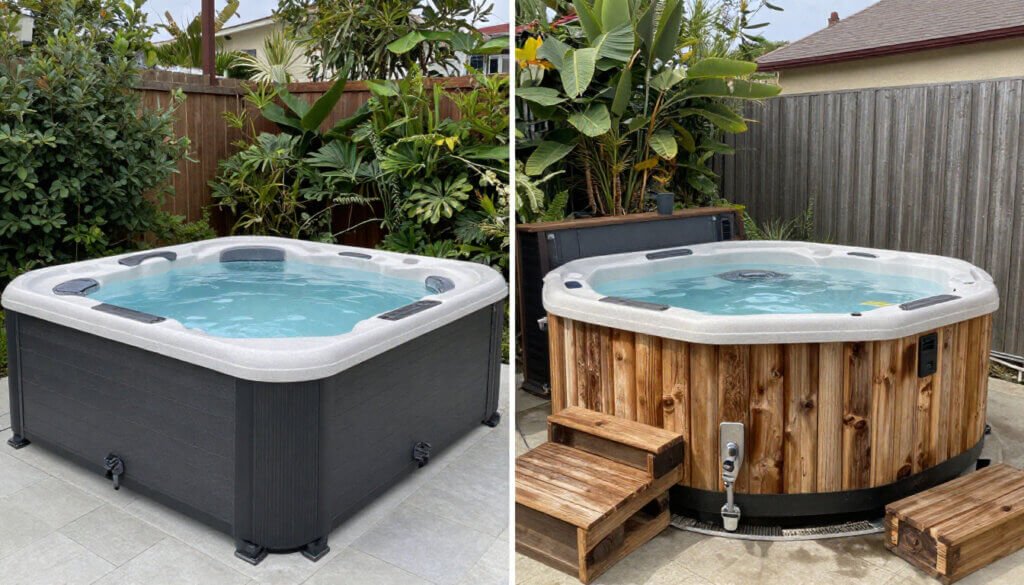
Pellet vs Wood-Fired Hot Tub Which One Should You Buy?
If you’ve been browsing options for a garden hot tub, you’ve probably noticed two main heating styles keep coming up: traditional wood-fired and the newer pellet-heated versions. Both get you to the same result a hot, relaxing soak outdoors but the way they get there, and the day-to-day experience of owning one, is genuinely different.
There’s no universally right answer here. It really comes down to how you plan to use it, how much effort you want to put in, and what kind of experience you’re after. Let’s break it down properly so you can decide with confidence.
How Each One Actually Works
A classic wood fired hot tub heats water using logs burned in a stove, either built into the tub (integrated) or attached outside it (external). You control the heat by how much wood you add and how often you feed the fire.
A pellet hot tub works on the same basic principle burning fuel to heat the water but instead of logs, it uses compressed wood pellets fed through a hopper, often with a thermostat or app control that manages the burn rate automatically. Some pellet models can maintain your set temperature with minimal manual input, which is the biggest practical difference between the two.
Ease of Use
This is where the two options really split.
Wood-fired tubs require some hands-on involvement lighting the fire, feeding logs, monitoring the temperature. For a lot of people, that’s actually part of the appeal. There’s something genuinely relaxing about the ritual of building a fire before your soak.
Pellet tubs are built for convenience. Fill the hopper, set your target temperature, and let the system manage itself. If you want to come home, press a button, and have your tub ready in an hour or two without checking on it constantly, this is the more practical option.
Heating Time and Temperature Control
Both types heat efficiently, but pellet systems tend to offer more consistent, hands-off temperature control since they can regulate fuel feed automatically based on your target setting. Wood-fired tubs give you more manual control but require you to actively manage the fire to maintain a steady temperature, especially during longer soaking sessions.
If precise, low-effort temperature control matters to you, pellet has the edge. If you enjoy actively managing the fire and don’t mind the extra attention, wood-fired feels more natural.
Running Costs
Here’s where things get interesting, and it’s worth being honest about it.
- Wood-fired tubs generally cost less to run per session since firewood (especially if you’re sourcing your own) is cheap or even free.
- Pellet tubs use compressed fuel that’s typically bought in bags, and while pellets burn efficiently, the cost per session is usually slightly higher than raw logs though you’re paying for convenience and consistency.
If running cost is your main priority and you don’t mind manual involvement, wood-fired usually wins. If convenience is worth a bit extra to you, pellet makes sense.
Which One Fits Your Lifestyle?
This is really the core question, so let’s match each type to the kind of person who’ll get the most out of it.
A wood-fired hot tub suits you if:
- You enjoy a slower, more hands-on evening ritual
- You have easy access to firewood (or enjoy sourcing your own)
- You’re not in a rush and enjoy the process as much as the soak itself
- You want lower running costs over time
A pellet hot tub suits you if:
- You want a quicker, more predictable soak with less manual effort
- You value consistent temperature control without constant monitoring
- You’re often short on time and want the tub ready with minimal fuss
- You don’t mind paying slightly more for convenience
Neither choice is “better” in an absolute sense it genuinely depends on the kind of experience you want from your tub.
Maintenance Differences
Wood-fired stoves need regular ash removal and occasional flue cleaning, especially with frequent use. Pellet systems typically require less manual cleanout since combustion is more controlled and efficient, though the hopper and feed mechanism still need occasional attention to keep things running smoothly.
If low-maintenance ownership is a priority, pellet tends to be the easier option long-term.
Which Should You Actually Buy?
If you’re still torn, ask yourself one simple question: do you want the process to be part of the relaxation, or do you want the relaxation with as little process as possible?
For UK garden owners, glamping sites, and countryside properties without easy electrical access, a traditional wood-fired setup often feels more natural and cost-effective. For busy households or anyone who wants a near-instant, low-effort soak, pellet heating is worth the slightly higher running cost.
Final Thoughts
Both wood-fired hot tubs and pellet models will get you to the same warm, relaxing end result the real difference lies in the journey to get there. Think honestly about your routine, how much time you want to spend managing the fire, and whether convenience or cost matters more to you.
If you’re comparing your options and want honest advice on which setup suits your garden and lifestyle, the team at Tamed Ocean can talk you through both and help you land on the right choice no pressure, just practical guidance.
Frequently Asked Questions
Is a pellet hot tub more expensive than a wood-fired one?
The upfront cost is often slightly higher for pellet models due to the automated feed system, and running costs per session can also be a little higher than using raw firewood.
Which is easier to maintain, pellet or wood-fired?
Pellet systems generally require less manual cleanout since combustion is more controlled, while wood-fired stoves need regular ash removal and occasional flue cleaning.
Can I switch between wood and pellets in the same stove?
Some stoves are designed for one fuel type only, so it’s worth checking with your supplier before assuming a tub can handle both.
Which heats up faster, pellet or wood-fired? Both heat at a similar rate overall, but pellet systems offer more consistent, automated temperature control, while wood-fired heating depends on how actively you manage the fire.
Is a wood fired hot tub for sale cheaper to run long-term than a pellet one?
Generally, yes, especially if you have access to your own firewood, since pellets are typically bought in bags and cost a bit more per session.
Do I need electricity for either type?
Neither requires mains electricity for heating, making both wood-fired and pellet hot tubs suitable for off-grid gardens, though some pellet models may need power for automated controls.