
Why Wood Fired Hot Tubs Are Becoming So Popular in the UK
Something has shifted in UK gardens over the last few years. What was once considered a niche product the kind of thing you’d only encounter at a rural holiday cottage or a Scandinavian-inspired retreat has quietly become one of the most searched outdoor living products in Britain.
Wood fired hot tubs are appearing in back gardens from Cornwall to the Scottish Highlands. Not just in large countryside properties either, but in terraced house gardens, suburban semi-detached homes, and compact urban outdoor spaces. The question worth asking is why now? What’s driving this growth, and is it just a trend or something with more staying power?
The answer turns out to be a combination of factors. Some are practical. Some are cultural. And some come down to the very specific way British people have changed how they think about their homes and outdoor spaces.
The Energy Cost Factor
It would be dishonest to start anywhere other than here. UK energy prices rose sharply from 2022 onwards and, while they’ve adjusted somewhat since, the general direction has left most households permanently more conscious of electricity consumption.
An electric hot tub runs a 3 to 6 kilowatt heater regularly to maintain water temperature. At current UK energy rates, that translates to a meaningful addition to your monthly electricity bill — estimates typically sit between £50 and £120 per month for regular users. Over a year, that’s £600 to £1,400 in running costs on top of what you paid to buy it.
Wood fired hot tubs removed that concern entirely for thousands of buyers. You heat with dry firewood, the fuel cost per session is minimal, and there’s no standing electricity cost when the tub isn’t in use. For households that became much more aware of energy spending from 2022 onwards, this shift in running cost profile made the wood fired option suddenly worth a serious look.
This wasn’t a marginal consideration for many UK buyers, it was the primary trigger that moved them from browsing to buying.
The Outdoor Living Shift
The pandemic years changed how British people relate to their homes and outdoor spaces in ways that haven’t fully reversed. Gardens went from being pleasant extras to being actively used daily for exercise, relaxation, work, and socialising. People invested in their outdoor spaces at a level the UK had never previously seen garden offices, outdoor kitchens, fire pit areas, quality garden furniture.
That shift created a new kind of buyer: someone who treats their garden as a genuine extension of their living space rather than somewhere to mow occasionally. For this buyer, a wood fired hot tub UK installation made complete sense. It wasn’t a luxury for people with large country properties. It was a considered addition to a garden that was now being actively designed and enjoyed.
This cultural shift also changed the social meaning of having a hot tub. It moved from being something associated with a certain type of ostentatious wealth to being a natural part of an outdoor lifestyle that millions of UK households were already building.
The Appeal of Off-Grid and Low-Tech Living
There’s been a broader cultural movement in the UK and across Europe generally towards products and experiences that feel more natural, more tactile, and less dependent on electricity and screens. Foraging, wild swimming, sourdough baking, open fire cooking. Each of these has seen significant growth, and they all share a common thread: the appeal of a process that connects you to something physical and real.
A wood fired hot tub fits perfectly into this space. You gather wood. You build a fire. You watch the temperature rise over an hour or two. You sit in the steam while the fire burns down. The experience is completely off-grid by nature, and that’s precisely part of the appeal for a significant portion of buyers.
This isn’t about rejecting modern life. It’s about having a corner of daily or weekly experience that feels different slower, more sensory, more deliberate. The UK market for this kind of product has grown considerably as the idea of an outdoor ritual gained cultural traction.
Influence of Scandinavian and Nordic Lifestyles
Scandinavian design and lifestyle have been influential in the UK for years from minimalist interior design to the widespread adoption of the hygge concept. Hot bathing culture is deeply embedded in Nordic life, and British consumers have increasingly absorbed this influence.
In Finland, Sweden, and Norway, outdoor bathing whether in a hot tub, sauna, or natural body of water is a normal part of life across all age groups and income levels. It’s not an occasional luxury. It’s a regular practice with real cultural weight.
As UK consumers became more familiar with this way of living through travel, social media, and Nordic-themed lifestyle content, the idea of a wood fired hot tub in a British garden began to feel less foreign and more aspirational. The Scandinavian connection also gave the product a certain credibility these are cultures that have been using outdoor wood fired bathing for centuries. The UK was simply catching up.
Social Media and the Visual Appeal of Wood
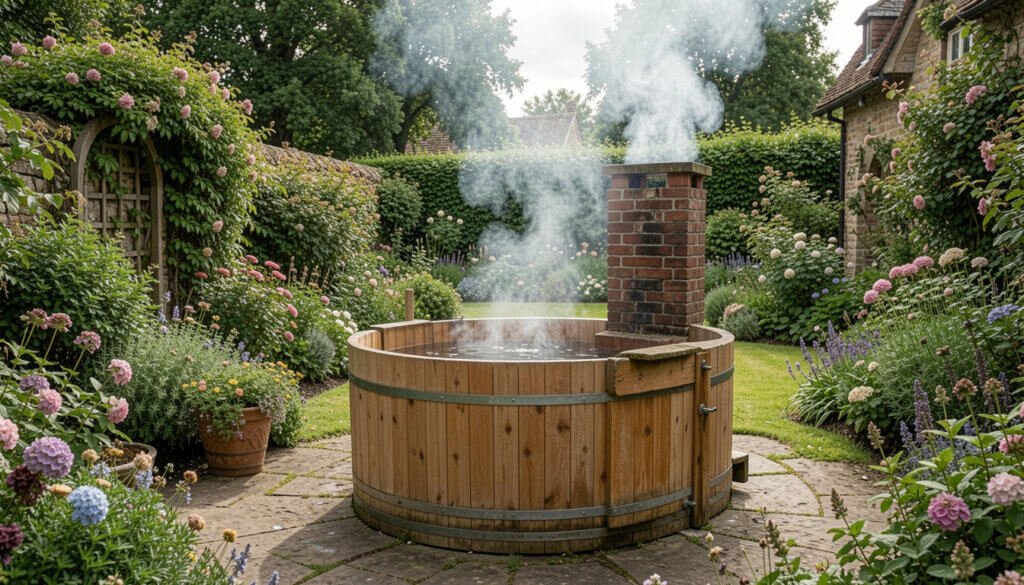
It would be naive to ignore the role of social media in the growth of wood fired hot tubs in the UK. Instagram and Pinterest in particular are heavily visual platforms, and a round cedar hot tub with steam rising from the water, surrounded by a winter garden or a candlelit terrace, photographs extraordinarily well.
This visual quality has done a huge amount of organic marketing for the category. Owners share their tubs. Holiday cottages feature their hot tubs as a key selling point in listing photographs. Garden designers include them in project portfolios. Each image reaches a new audience and gradually normalises the product.
The natural wood material is central to this. A wooden hot tub simply looks more beautiful in a garden photograph than an acrylic shell or an inflatable model. The round barrel shape, the warm timber tones, and the physicality of the wood-burning stove create images that feel genuine and desirable rather than like product marketing.
Holiday Cottage Culture and the Staycation Effect
The UK holiday cottage market has embraced wood fired hot tubs enthusiastically and this has had a direct knock-on effect on domestic sales.
Booking platforms consistently show that properties listed with a hot tub command higher nightly rates and achieve better occupancy. For many cottage owners, installing a wood fired hot tub was a straightforward commercial decision. The investment returned itself within a season in many cases.
But the more significant effect was on guests. Hundreds of thousands of UK families have now experienced a wood fired hot tub for the first time at a holiday cottage. They’ve built the fire, sat in it on a cold evening, and come home thinking why don’t we have one of these?
The holiday experience is one of the most powerful sales tools the category has. It converts curious observers into motivated buyers in a way that no advertisement could replicate. A significant proportion of UK buyers cite a positive holiday experience as the direct trigger for their purchase.
The No-Electrician Advantage in Older UK Properties
British housing stock is old by international standards. A large proportion of UK homes were built before modern electrical standards, and garden circuits capable of handling a 32-amp hot tub supply are far from universal.
Getting an electric hot tub properly installed in an older UK property often means a new outdoor circuit, an upgraded consumer unit in some cases, and the cost and disruption of electrical work. This isn’t a dealbreaker for everyone, but it is an additional cost and complication that puts some buyers off.
A wood fired hot tub needs no electrical work. You place it on a stable base, connect a garden hose to fill it, and light the stove. For owners of older homes — Victorian terraces, Edwardian semis, rural cottages without modern wiring this is a genuine practical advantage that the wood fired option uniquely offers.
They Work Better in the UK Climate Than Electric Tubs
There’s an irony that makes complete sense once you understand it: wood fired hot tubs are better suited to the UK climate than electric tubs in several practical ways.
Cold and damp conditions which describe most of the UK for most of the year are actually ideal for wood fired hot tub use. The contrast between cold air and hot water is at its most enjoyable when the temperature outside is low. The wood fires heat efficiently because the stove draws well in cool, dense air. And the experience of sitting in a steaming tub in autumn rain or winter frost is something most UK owners cite as their favourite way to use it.
Electric hot tubs, by contrast, lose heat faster in cold conditions, meaning the heater runs more frequently and costs more. The experience itself isn’t as naturally aligned with cold-weather outdoor use they feel more like an indoor spa that happens to be outside.
The wood fired option was essentially designed for exactly the climate the UK has.
Frequently Asked Questions
Are wood fired hot tubs suitable for small UK gardens?
Yes, and this is one of the reasons they’ve grown in popularity. A 2-person wood fired hot tub has a footprint of roughly 1.5 metres in diameter — comparable to a large garden table. They can fit comfortably in courtyard gardens, rear gardens of terraced houses, and smaller suburban plots. The absence of a required power cable also makes placement more flexible.
How much does it cost to install a wood fired hot tub in the UK?
The installation cost is typically minimal compared to an electric hot tub. You need a stable flat base — concrete, decking, or compacted gravel — and a nearby water supply for filling. No electrician is required. The main cost is the tub itself, which for a quality UK supplier ranges from around £1,500 for a 2-person model to £3,500 or more for a larger 4-person configuration with an external stove.
Do you need planning permission for a wood fired hot tub in the UK?
In most cases, no. Hot tubs are treated as garden features under UK permitted development rights and don’t require planning permission in standard residential properties. If your property is listed, in a conservation area, or has specific planning conditions, it’s worth checking with your local authority first.
How long does it take to heat up a wood fired hot tub in winter?
In cold UK winter conditions, expect around 2 to 3 hours to reach a comfortable soaking temperature of 37 to 39°C. Wind and ambient temperature both affect this, so starting the fire earlier on very cold days is recommended. A well-fitted insulating cover helps retain heat between sessions significantly.
What’s the best wood to burn in a wood fired hot tub in the UK?
Seasoned hardwood is the best choice — oak, ash, and birch are all widely available in the UK and burn efficiently. The key is that the wood is properly dried, ideally for at least one to two years. Wet or green wood produces far more smoke, burns less efficiently, and leaves more ash residue in the stove.
Can you use a wood fired hot tub year-round in the UK?
Absolutely and most owners do. Many describe autumn and winter as the best seasons because the cold air makes the warm water feel exceptional by contrast. Summer use is equally possible. The main year-round consideration is keeping the tub filled with water during cold snaps to prevent the timber from drying out and cracking.
Are wood fired hot tubs difficult to look after?
They require straightforward ongoing care rather than complex maintenance. Water chemistry needs monitoring, the stove needs occasional ash cleaning, and the exterior timber benefits from annual treatment with wood oil. Compared to an electric hot tub with pumps, jets, heaters, and electronic controls, there’s genuinely less to maintain and fewer things that can go wrong.
What This All Adds Up To
The growth of wood fired hot tubs in the UK isn’t the result of one single factor — it’s a convergence of several trends all pointing in the same direction at the same time.
Rising energy costs made the running cost difference matter. The shift in how UK households use outdoor space created a new type of buyer. Nordic lifestyle influence made wood fired bathing feel culturally relevant. Social media made it visually desirable. And the practical reality of older UK housing stock made the no-electrician installation a genuine advantage.
The category has grown because it genuinely suits the UK — the climate, the housing stock, the cultural moment, and the economic reality of the last few years. That’s not a combination that fades quickly.
If you’re considering joining the growing number of UK homeowners who’ve made the switch, browse the handcrafted range at Tamed Ocean and find the right model for your garden.