
Why Choose a Wooden Wood Fired Hot Tub Over Acrylic or Plastic?
Walk into any garden center or scroll through any outdoor living website and you’ll find hot tubs in every shape, size, and material. Acrylic shells with LED lights. Inflatable plastic tubs that fold away in winter. Hard plastic cabinet models with built-in jet systems. And then sitting apart from all of them the wooden wood fired hot tub.
The difference isn’t just visual, though that’s the first thing most people notice. The difference goes right down to how the material performs, how long it lasts, what it costs to run, and how the experience of actually using it compares. This guide covers all of it so you can make a decision based on real information rather than marketing.
What Are the Main Hot Tub Material Options?
Before getting into the comparison, it helps to understand what each material actually is.
Acrylic hot tubs are the type most people picture when they imagine a modern spa. They have a rigid, moulded shell made from reinforced acrylic, usually sitting inside a timber or synthetic cabinet. They’re almost always electrically heated and jet-powered.
Inflatable or plastic hot tubs are the entry-level option. Usually made from PVC or reinforced vinyl, these are designed to be affordable and portable. They inflate with an air pump, heat electrically, and have basic bubble systems rather than pressurized jets.
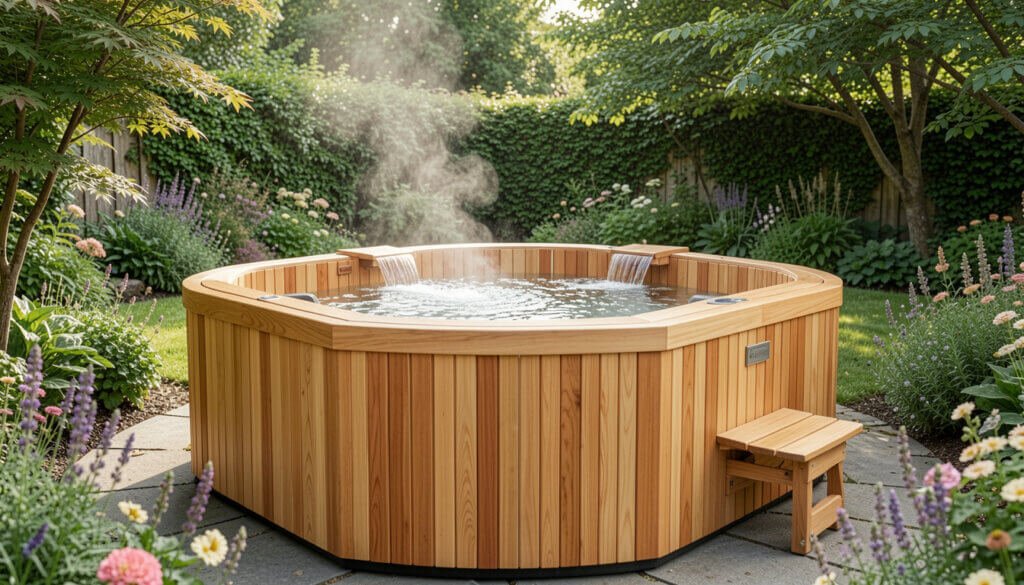
Wooden wood fired hot tubs are built from solid timber staves typically cedar, spruce, or larch held together with metal bands or hoops, like a traditional barrel. They’re heated by a wood-burning stove that sits either inside the tub or externally alongside it. No electricity required.
Each material has a different place in the market, a different price bracket, and a genuinely different user experience. Here’s how they compare on the factors that actually matter.
1. Longevity and Build Quality
This is where wooden wood fired hot tubs have the clearest advantage over acrylic and plastic alternatives.
A well-made wooden tub using quality Nordic spruce or Canadian cedar will last anywhere from 10 to 20 years with normal maintenance. The timber used in these tubs is specifically chosen for its resistance to moisture, heat cycling, and outdoor conditions. Cedar in particular contains natural oils that inhibit rot and resist water damage without heavy chemical treatment.
Acrylic hot tubs have a reasonable lifespan — typically 8 to 15 years for the shell itself — but the mechanical components are a different matter. Pumps, jets, heaters, and control boards all fail over time. Repairs can be expensive, parts become discontinued, and a single pump failure on an older model can make repair uneconomical. You end up replacing the whole unit rather than fixing it.
Plastic inflatable tubs are at the other end entirely. Most last one to three years before punctures, pump failure, or general material fatigue makes them unusable. They are genuinely a short-term product.
The wooden wood fired hot tub wins here because there are so few mechanical parts to fail. The stove burns wood. The water heats through convection. The timber holds the water. That simplicity is a durability advantage.
2. Running Costs Over Time
Running costs are where the difference between a wood fired hot tub and an electric model becomes very clear over time.
A typical electric acrylic hot tub uses between 3 and 6 kilowatts of power when running. At current UK electricity prices, regular use can cost between £60 and £120 per month. Over five years, that’s £3,600 to £7,200 spent just on electricity on top of the original purchase price.
Plastic inflatable tubs are cheaper to run per session because they’re smaller, but they heat more slowly and lose heat faster, which means the electric heater runs almost constantly to maintain temperature.
A wooden wood fired hot tub uses dry firewood. A typical session uses one to two armloads of seasoned hardwood, which costs very little especially if you buy logs in bulk during summer. Annual fuel costs for a regularly used wooden hot tub in the UK are typically under £150. Over five years, the difference in running costs between a wood fired and an electric tub can be thousands of pounds.
There’s also no standing electricity cost when the tub isn’t in use. An electric tub left on standby to keep the water at temperature costs money every single day, even when nobody uses it.
3. Installation and Setup
Getting an electric acrylic hot tub up and running properly involves more than most buyers anticipate. You typically need a dedicated electrical circuit installed by a qualified electrician — in the UK, hot tubs require a 32-amp or 40-amp supply with an RCD protection system. Depending on how far from your consumer unit the tub is being placed, this can cost between £300 and £800 just for the electrical work.
You also need a stable, flat surface capable of taking the combined weight of the tub, water, and users often 1,500kg or more for a full-sized model.
A wooden wood fired hot tub requires a flat, stable base — concrete, decking, or compacted gravel all work well — but no electrical work at all. You position the tub, fill it with water from a garden hose, and light the stove. That’s the entire setup process. Many owners have their wooden hot tub ready to use within a few hours of delivery.
This simplicity also means you can place a wooden hot tub in parts of your garden where running power would be impractical or expensive. Remote corners, end-of-garden retreats, and outbuilding areas are all perfectly viable locations.
4. The Experience of Using Each Type
This one is subjective, but it matters enormously and it’s consistently where wooden wood fired hot tubs get the strongest feedback from owners.
An acrylic hot tub with jets is a stimulating experience. The jets massage specific muscle groups, the LED lighting creates ambience, and the temperature is precise and constant. For some people, that’s exactly what they want.
A wooden wood fired hot tub is a different kind of experience altogether. The water is naturally heated, without any mechanical agitation unless you add an optional air blower. The tub is round, so everyone sits facing inward or outward naturally. The wood of the tub itself feels warm to the touch. And the whole experience building the fire, watching the temperature rise slowly, sitting in the steam while wood smoke drifts past connects to something older and more elemental than pressing a control panel.
Many owners describe it as the difference between a spa and an actual outdoor experience. One is controlled and mechanical. The other is natural and sensory.
Plastic inflatable tubs, by comparison, are generally considered a compromise option. The PVC material doesn’t retain heat well, the sides are soft and uncomfortable to lean against, and the overall experience is functional rather than enjoyable.
5. Aesthetics in a Garden Setting
A wooden wood fired hot tub looks like it belongs outside. The natural timber, the round barrel shape, and the stove pipe rising above it are genuinely attractive garden features that blend with almost any outdoor style cottage gardens, modern timber decking, rural properties, and contemporary urban gardens alike.
Acrylic tubs tend to look fine when new but can look dated within a few years. The synthetic cabinet materials, plastic steps, and moulded shells don’t age as gracefully as natural wood.
Inflatable tubs look temporary because they are. There’s no way around the fact that an inflated PVC dome sitting on a patio looks like exactly what it is — a product designed for convenience, not permanence.
Wood, by contrast, weathers beautifully. Left untreated, the exterior gradually silvered to a natural grey. Treated annually with oil, it stays warm and golden. Either way, it looks better in a garden than any synthetic alternative.
6. Environmental Considerations
For buyers who think about sustainability, a wooden wood fired hot tub made from responsibly sourced timber and heated with dry firewood has a much lower environmental footprint than an electrically heated acrylic or plastic alternative.
The timber is a natural, renewable material. Firewood from sustainably managed forests is considered carbon neutral the carbon released when it burns is the same carbon the tree absorbed during growth. There are no electronic components, no refrigerant chemicals, and no plastic parts that end up in landfill after a few years.
Plastic hot tubs create significant waste when they reach end of life. Acrylic shells and synthetic cabinet materials are difficult to recycle and typically go to landfill. A wooden tub at the end of its life can be composted or repurposed the steel hoops recycled separately.
7. Maintenance Realities
All hot tubs require maintenance, but the type of maintenance differs significantly.
Acrylic hot tubs require regular water chemistry management — pH, alkalinity, sanitiser levels — and mechanical maintenance of pumps, filters, and jets. Filter cleaning, pump inspections, and chemical costs are ongoing. When a component fails, you need a specialist to repair it.
Wooden wood fired hot tubs also require water chemistry management, but the mechanical maintenance is minimal. The stove needs occasional cleaning — ash removal and flue inspection once or twice a season. The wood benefits from an annual treatment with appropriate oil. The hoops may need tightening as the wood settles in the first year. That’s genuinely the full list for most owners.
The absence of pumps, jets, heaters, and electronic controls means there’s simply less to go wrong and less to maintain year on year.
Frequently Asked Questions
Does a wooden hot tub leak?
A new wooden hot tub may drip slightly when first filled as the timber swells and the staves seat together properly. This normally resolves within 24 to 48 hours. After the initial settling period, a well-made tub should be completely watertight. If a tub develops a leak later, it’s usually caused by the tub drying out completely between uses keeping it filled prevents this.
How do you clean a wooden wood fired hot tub?
Regular water treatment with appropriate hot tub chemicals or a natural saltwater system keeps the water clean between full changes. The tub interior should be scrubbed down when you do a full water change, which most owners do every one to three weeks depending on usage and water quality. Avoid harsh chemical cleaners on the wood itself.
Is a wooden hot tub harder to maintain than an acrylic one?
Not really it’s just different. An acrylic tub has more mechanical components that require monitoring and occasional repair. A wooden tub has simpler maintenance needs but does require that you keep it filled and treat the exterior timber periodically. Most wooden hot tub owners find the routine straightforward once established.
Can a wooden wood fired hot tub be used with chemicals the same as a normal hot tub?
Yes. Standard hot tub chemicals chlorine, bromine, pH adjusters, and clarifiers are all compatible with wooden hot tubs. Some owners prefer natural alternatives like saltwater systems or UV sanitisers, which are also compatible. The wood itself is not harmed by appropriate use of hot tub chemicals at correct doses.
How warm does a wood fired hot tub get?
A wood fired hot tub typically reaches 37 to 40°C, which is the ideal soaking range recommended for safe hot tub use. The temperature is controlled by managing the fire burning it down reduces heat input while the water slowly cools, or adding more wood maintains or raises temperature.
Does a wooden hot tub need a pump or jets?
No a standard wooden wood fired hot tub relies on natural convection for water circulation rather than a pump system. The water moves as it heats, which provides gentle circulation. Some models offer optional air blowers for a bubble effect if preferred, but jets are not a standard feature and most owners find them unnecessary.
What’s the main reason people choose a wooden hot tub over acrylic?
The most common answers are running costs, aesthetics, and the overall experience. The combination of lower fuel costs, natural materials that look beautiful in a garden, and a more outdoor, sensory soaking experience consistently wins over buyers who take the time to compare both options properly.
Summing It Up
When you put all the factors side by side durability, running costs, installation, experience, aesthetics, maintenance, and environmental impact a wooden wood fired hot tub holds up extremely well against acrylic and plastic alternatives.
Acrylic tubs offer convenience and jet massage, which is the right choice for some buyers. But for anyone who values lower running costs, natural materials, simple maintenance, and a genuinely outdoor experience, the wooden option delivers more of what actually matters over the long term.
If you want to see what a quality handcrafted wooden hot tub looks and feels like before making a decision, explore the full range at Tamed Ocean.